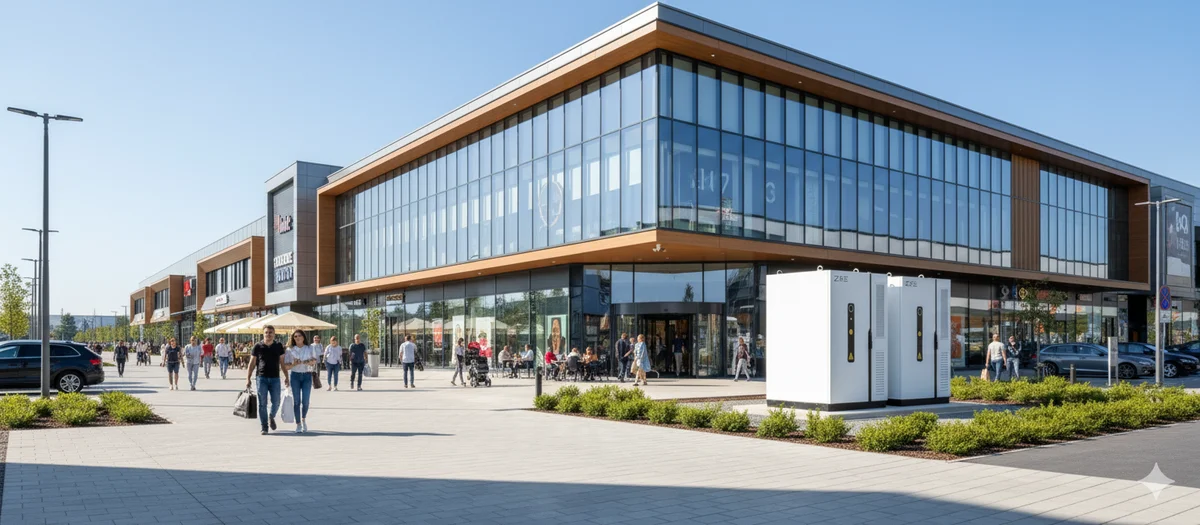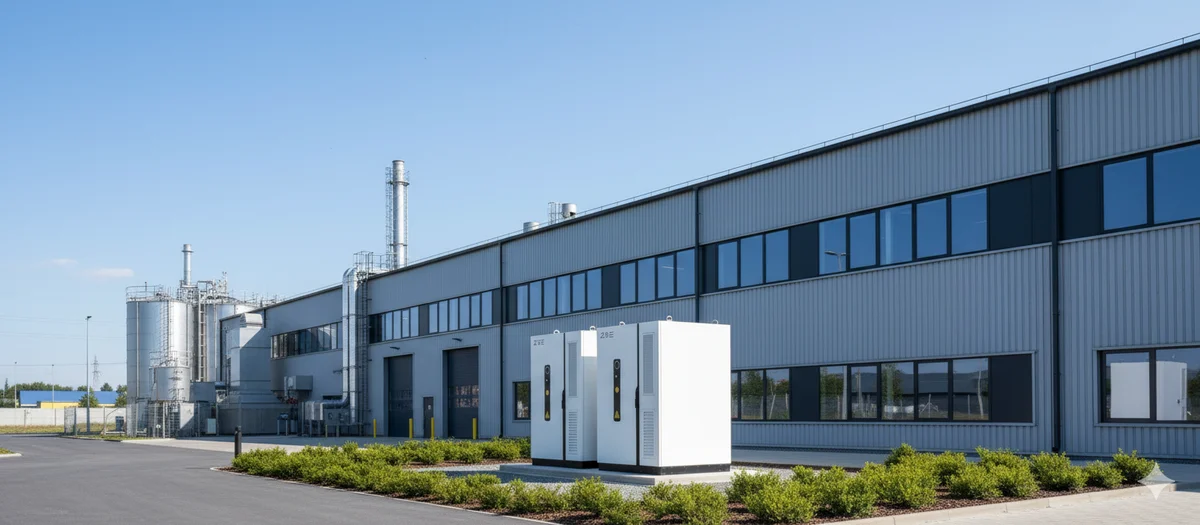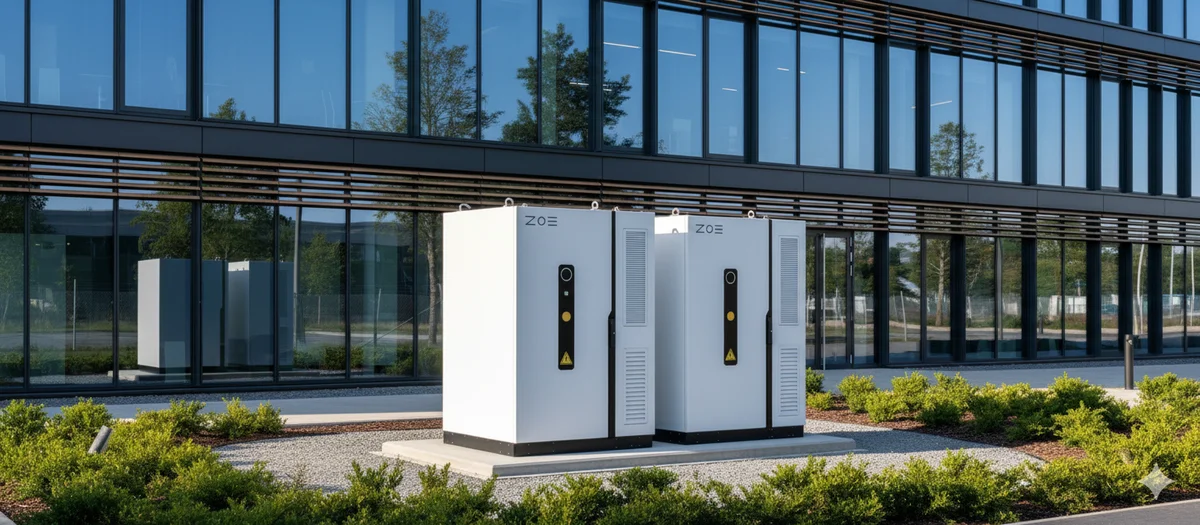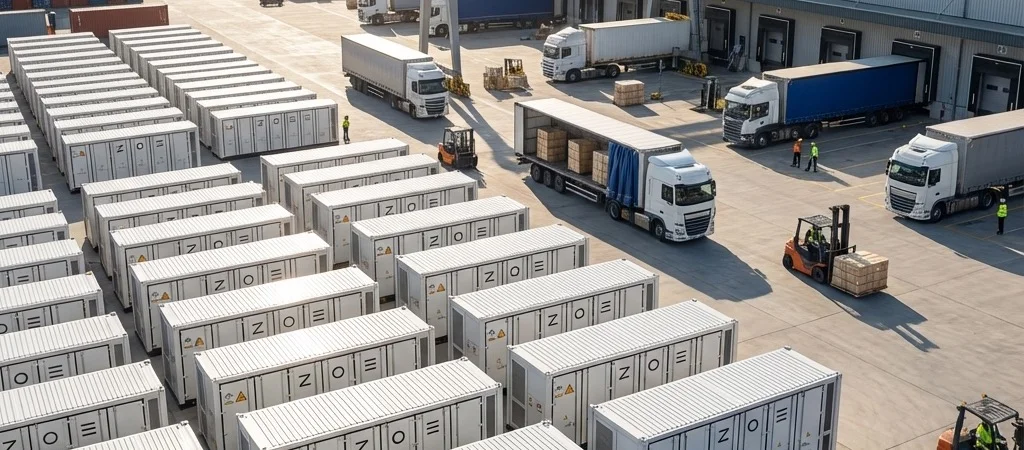
Do you have unused land at your production facility, logistics center, or warehouse? Do you have a grid connection with available capacity? You can earn from this – without investing your own funds, without technological risk, and without operational involvement.
The Battery-as-a-Service (BaaS) model allows industrial landowners to generate passive income from leasing land for energy storage (BESS) installations. The operator finances, installs, and manages the storage, and you receive a share of revenues from the Capacity Market and ancillary services.
In this article, we explain what energy storage hosting is, what the requirements are, how the process works, how much you can earn, and what risks are associated with this business model.
What is Energy Storage Hosting?
Energy storage hosting is a business model where the landowner (Host) provides land and grid connection to an energy storage operator (BESS). The operator finances 100% of the investment, installs the storage, manages it, and generates revenues from the Capacity Market and ancillary services. In return, the Host receives compensation – typically in the form of revenue share or fixed lease payment.
How does it work?
- Host provides land (minimum 5 m²) and grid connection (minimum 100 kW available capacity).
- Operator finances purchase, transport, installation, and certification of energy storage.
- Storage participates in the Capacity Market and provides ancillary services (FCR, aFRR), generating revenues.
- Revenues are shared between Operator and Host according to the contract (typically 50/50 or other ratio).
- Operator bears all costs of service, repairs, insurance, and disposal.
Key advantages for the Host:
- 0 PLN own investment – Operator finances 100% of the project
- Passive income – You receive revenue share without involvement
- No technological risk – Operator bears risk of failures and degradation
- No operational costs – Operator covers service, repairs, insurance
- Long-term stability – 10-15 year contract guarantees predictable revenues
- Contribution to energy transformation – Support stability of the Polish power grid
Requirements for Energy Storage Hosts
Not every property is suitable for hosting energy storage. Operators look for locations that meet specific technical and legal criteria.
Technical Requirements:
1. Grid Connection
- Minimum 100 kW available capacity (unused power in the connection)
- Three-phase connection
- Stable grid parameters (voltage, frequency)
- Possibility of installing measurement and control systems
2. Available Space
- Minimum 5 m² for small systems (100-200 kW)
- 10-20 m² for medium systems (500 kW - 1 MW)
- 20-30 m² for large systems (1 MW+)
- Flat, stable ground (concrete, asphalt, or prepared ground)
- Access for delivery and installation (truck access)
3. Location
- Proximity to grid connection point (max. 50-100 m)
- No flooding risk
- Adequate ventilation (for outdoor installations)
- Access for maintenance and emergency services
Legal Requirements:
1. Property Rights
- Ownership or long-term lease (min. 15 years)
- Right to install technical infrastructure
- No legal encumbrances preventing installation
2. Permits and Approvals
- Building permit (if required by local regulations)
- Grid connection agreement
- Compliance with local zoning plan
- Environmental permits (if required)
3. Insurance and Liability
- Operator must maintain comprehensive insurance
- Clear liability allocation in contract
- Protection of Host’s interests in case of damage
How Much Can You Earn from Hosting?
Revenues from energy storage hosting depend on many factors: grid connection capacity, market conditions, contract terms, and revenue-sharing model.
Revenue Models:
1. Revenue Share (most common)
- Host receives 30-50% of total revenues from Capacity Market and ancillary services
- Revenues vary depending on market conditions
- Potential: 50-150 PLN/kW/month for the host
- Example: For 1 MW system, host can earn 50,000 - 150,000 PLN annually
2. Fixed Lease Payment
- Host receives fixed monthly payment regardless of revenues
- More predictable but typically lower than revenue share
- Potential: 30-80 PLN/kW/month
- Example: For 1 MW system, host can earn 30,000 - 80,000 PLN annually
3. Hybrid Model
- Combination of fixed payment + revenue share
- Guaranteed minimum + upside potential
- Potential: 20-50 PLN/kW/month fixed + 10-30% revenue share
Factors Affecting Revenues:
- Grid connection capacity – Larger capacity = higher revenues
- Location – Proximity to grid bottlenecks increases value
- Market conditions – Capacity Market prices, FCR/aFRR rates
- Contract terms – Revenue split, contract duration, escalation clauses
- Storage utilization – How often and how much the storage is used
The Hosting Process: Step by Step
Phase 1: Initial Assessment (1-2 weeks)
- Contact operator – Submit inquiry with basic information about your property
- Preliminary analysis – Operator assesses technical and commercial potential
- Site visit – Operator inspects location, grid connection, and space
- Feasibility study – Operator prepares detailed technical and financial analysis
Phase 2: Contract Negotiation (2-4 weeks)
- Term sheet – Operator presents preliminary offer with key terms
- Due diligence – Legal, technical, and financial verification
- Contract drafting – Preparation of detailed hosting agreement
- Legal review – Both parties review contract with lawyers
- Contract signing – Formalization of cooperation
Phase 3: Permits and Approvals (2-6 months)
- Building permit – If required by local regulations
- Grid connection agreement – Formalization with distribution system operator
- Environmental permits – If required
- Insurance – Operator secures comprehensive coverage
Phase 4: Installation and Commissioning (1-3 months)
- Site preparation – Ground preparation, access roads
- Delivery – Transport of storage containers to site
- Installation – Placement, connection to grid, integration
- Testing – Performance tests, safety checks
- Certification – Regulatory approvals, grid operator acceptance
- Commissioning – Start of commercial operation
Phase 5: Operation (10-15 years)
- Revenue generation – Storage participates in Capacity Market and ancillary services
- Monitoring – 24/7 remote monitoring by operator
- Maintenance – Regular service, repairs, upgrades
- Revenue sharing – Monthly or quarterly payments to host
- Reporting – Operator provides performance and revenue reports
Risks and How to Mitigate Them
Risk 1: Market Risk
Description: Revenues from Capacity Market and ancillary services may fluctuate due to market conditions.
Mitigation:
- Choose hybrid model with guaranteed minimum payment
- Diversify revenue streams (FCR, aFRR, arbitrage)
- Include escalation clauses in contract
- Analyze historical market data and trends
Risk 2: Operator Risk
Description: Operator may fail to meet obligations, go bankrupt, or underperform.
Mitigation:
- Verify operator’s financial stability and track record
- Include performance guarantees in contract
- Require comprehensive insurance
- Include termination clauses for non-performance
Risk 3: Technical Risk
Description: Storage system may fail, degrade faster than expected, or become obsolete.
Mitigation:
- Ensure operator bears all technical risk
- Require performance guarantees
- Include upgrade and replacement clauses
- Verify operator’s technical capabilities
Risk 4: Legal Risk
Description: Regulatory changes, permit issues, or liability disputes.
Mitigation:
- Work with experienced energy lawyer
- Include regulatory change clauses
- Ensure clear liability allocation
- Maintain comprehensive insurance
Risk 5: Reputational Risk
Description: Storage system may cause negative perception among neighbors or community.
Mitigation:
- Choose reputable operator with good track record
- Ensure compliance with all safety standards
- Communicate benefits to community
- Maintain transparent operations
Is Energy Storage Hosting Right for You?
Energy storage hosting is an attractive option if you:
✅ Have unused industrial land (min. 5 m²) ✅ Have grid connection with available capacity (min. 100 kW) ✅ Want passive income without investment ✅ Want to avoid technical and operational involvement ✅ Are willing to commit to long-term contract (10-15 years) ✅ Want to support energy transformation and improve ESG metrics
Energy storage hosting may NOT be suitable if you:
❌ Don’t have sufficient grid connection capacity ❌ Plan to use the land for other purposes in near future ❌ Are not comfortable with long-term commitments ❌ Have concerns about safety or community perception ❌ Prefer full control over your property
Check Your Property’s Potential
Does your land have what it takes to become an energy storage host? Use our calculator to receive a free preliminary estimate of potential revenues.