BESS energy storage is not just technology supporting energy transformation – it’s primarily a source of multiple revenue streams for businesses in Poland. Since June 14, 2024, when the new balancing market launched, earning opportunities for energy storage have significantly increased. This comprehensive guide explains all possible revenue sources from commercial energy storage and shows how to combine them to maximize return on investment.
The Polish energy market is developing dynamically. BESS can generate revenues in many ways simultaneously – one storage system can participate in several markets at once, maximizing utilization of installed capacity. The key to success is the revenue stacking strategy – combining revenues from ancillary services (FCR, aFRR, mFRR), Capacity Market, energy arbitrage, on-site cost optimization, and flexibility services.
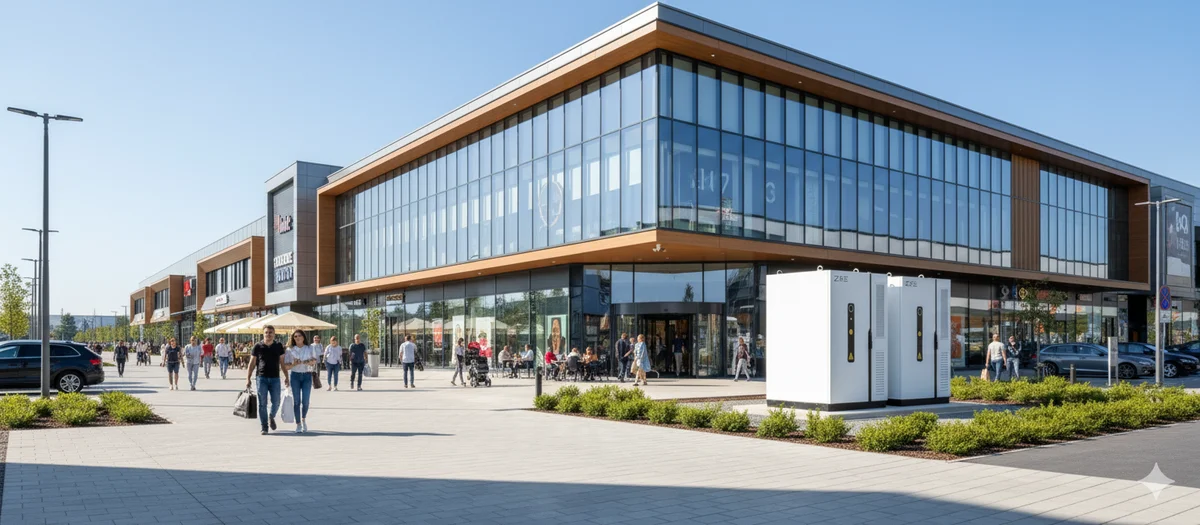
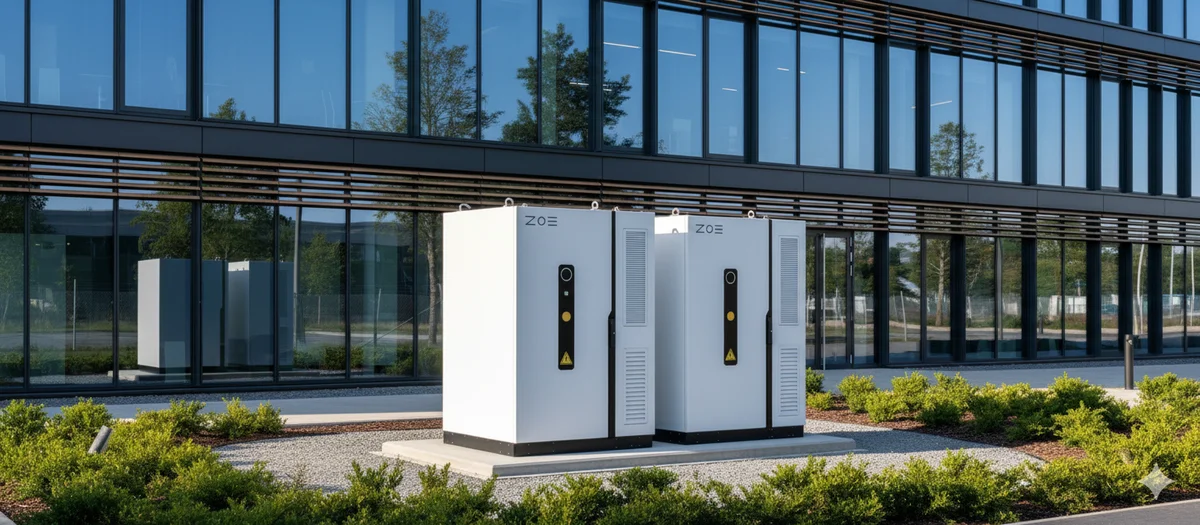
For companies that don’t want to invest capital in purchasing storage, the BaaS (Battery-as-a-Service) model is available, where an operator installs storage on the company’s property and shares revenues. We install compact all-in-one plug-and-play systems or larger units tailored to needs. The host provides space (min. 5 m²) and receives 30-50% of revenues without bearing investment costs, technical risk, or operational burden.
In this article, we discuss in detail all BESS revenue sources, legal requirements in Poland, risks, and practical steps to start earning from energy storage.
Note: Information in this article is educational and does not constitute investment or legal advice. Revenues from energy storage are variable and depend on market conditions. Before making investment decisions, we recommend consulting with a professional advisor.
What Are BESS Revenue Sources and How Do They Work?
BESS energy storage can generate revenues from six main categories that can be combined within a revenue stacking strategy:
- Ancillary services – FCR, aFRR, mFRR, RR – grid stability support
- Energy markets – price arbitrage, spot market trading
- Capacity Market – compensation for readiness to supply power during peak demand periods
- On-site optimization – peak shaving, PV self-consumption, EV charging optimization
- Flexibility services – DSR (Demand Side Response), services for DSOs
- Backup and resilience – emergency power, microgrids, business continuity
The key advantage of BESS is the ability to participate in multiple markets simultaneously. For example, storage can:
- Morning (6:00-10:00): Participate in FCR market, earning from frequency stabilization
- Midday (10:00-14:00): Charge from PV surplus (if available)
- Afternoon (14:00-18:00): Reduce peak demand (peak shaving), saving on capacity charges
- Evening (18:00-22:00): Participate in aFRR (evening peak, high prices)
- Night (22:00-06:00): Energy arbitrage (charge cheap, discharge expensive)
This is revenue stacking – maximizing returns by combining multiple revenue streams.
Revenue Source 1: Ancillary Services (FCR, aFRR, mFRR, RR)
Ancillary services are mechanisms that help the grid operator (PSE) maintain balance between production and consumption and stable frequency at 50 Hz.
FCR (Frequency Containment Reserve)
What it is: Automatic response to frequency deviations within 30 seconds.
How it works: Storage monitors grid frequency and automatically supplies or absorbs power proportionally to deviation.
Requirements:
- Minimum 1 MW capacity
- Full activation within 30 seconds
- Automatic control
- Continuous availability during committed periods
Revenues (2024):
- 50-150 PLN/MW/hour
- Annual potential: 400,000 - 1,200,000 PLN for 1 MW
aFRR (automatic Frequency Restoration Reserve)
What it is: Automatic response to PSE control signal within 5 minutes to restore frequency to 50 Hz.
How it works: Storage responds to automatic signal from PSE and maintains power for at least 30 minutes.
Requirements:
- Minimum 1 MW capacity
- Full activation within 5 minutes
- Automatic response to PSE signal
- Ability to maintain power for 30+ minutes
Revenues (2024):
- 30-100 PLN/MW/hour
- Annual potential: 200,000 - 600,000 PLN for 1 MW
mFRR and RR
mFRR: Manual activation within 15 minutes, lower revenues but less demanding technically.
RR: Activation within 30 minutes, lowest revenues but easiest to provide.
Revenue Source 2: Capacity Market
The Capacity Market rewards generators and storage for being available to supply power during peak demand periods.
How it works:
- Annual auction organized by PSE
- Winners commit to availability during specified periods
- Fixed payment for availability (PLN/kW/year)
- Penalties for non-delivery
Requirements:
- Minimum 2 MW capacity (or aggregation)
- Ability to deliver during delivery periods
- Certification and metering
Revenues (2024):
- 150-250 PLN/kW/year
- Annual potential: 150,000 - 250,000 PLN for 1 MW
- Predictable, stable baseline revenue
Revenue Source 3: Energy Arbitrage
Energy arbitrage involves buying electricity when it’s cheap and selling when it’s expensive.
How it works:
- Charge storage during low-price periods (night, midday PV surplus)
- Discharge during high-price periods (morning and evening peaks)
- Profit from price spread minus losses
Requirements:
- Access to spot market or time-of-use tariff
- Sufficient energy capacity (MWh)
- Smart control system for price optimization
Revenues (2024):
- Depends on price volatility and spread
- Annual potential: 100,000 - 300,000 PLN for 1 MW
- Higher in winter, lower in summer
Example:
- Buy at 200 PLN/MWh (night)
- Sell at 600 PLN/MWh (evening peak)
- Spread: 400 PLN/MWh
- Minus 10% losses: 360 PLN/MWh profit
- For 1 MW, 4-hour storage, one cycle/day: ~130,000 PLN/year
Revenue Source 4: Peak Shaving (Demand Charge Reduction)
Peak shaving reduces maximum power demand, lowering capacity charges from the grid operator.
How it works:
- Storage monitors facility’s power demand
- When demand approaches peak, storage discharges
- Reduces maximum demand recorded by meter
- Lowers monthly capacity charges
Requirements:
- On-site installation
- Real-time demand monitoring
- Sufficient power rating to shave peaks
Savings (2024):
- Capacity charges: 15-30 PLN/kW/month
- For reducing peak by 500 kW: 90,000 - 180,000 PLN/year
- One-time peak reduction affects entire year’s charges
Best for:
- Facilities with high, short-duration peaks
- Manufacturing with heavy machinery
- Cold storage with compressor starts
Revenue Source 5: PV Self-Consumption Optimization
For facilities with solar PV, storage maximizes self-consumption and reduces grid dependency.
How it works:
- Storage charges from PV surplus during midday
- Discharges during evening when PV doesn’t produce
- Increases self-consumption from 30-40% to 70-90%
- Reduces electricity purchases from grid
Requirements:
- On-site PV installation
- Sufficient storage capacity to store daily surplus
- Smart control system
Savings (2024):
- Avoid buying at 600-800 PLN/MWh
- Use own PV at ~200 PLN/MWh (LCOE)
- Savings: 400-600 PLN/MWh
- Annual potential: 50,000 - 150,000 PLN depending on PV size
Revenue Source 6: EV Charging Optimization
Storage can optimize electric vehicle charging costs and reduce grid impact.
How it works:
- Storage charges during low-price periods
- Provides power for EV charging during day
- Reduces peak demand from charging
- Enables fast charging without grid upgrades
Benefits:
- Lower charging costs (use cheap night electricity)
- Avoid demand charges from EV charging peaks
- Enable fast charging without expensive grid upgrades
- Provide backup power for critical EV charging
Revenue Source 7: Backup Power and Resilience
Storage provides emergency power during grid outages, ensuring business continuity.
Value:
- Avoid downtime costs (can be 10,000+ PLN/hour for manufacturing)
- Protect critical processes
- Maintain operations during outages
- Insurance against grid instability
Not direct revenue but:
- Reduces insurance premiums
- Avoids costly downtime
- Protects reputation
- Enables operation during grid emergencies
Revenue Stacking: Combining Multiple Streams
The key to maximizing BESS returns is combining multiple revenue streams:
Example Optimization Schedule (1 MW, 2 MWh system):
Weekday:
- 00:00-06:00: FCR participation (earn 300-900 PLN)
- 06:00-08:00: Discharge for morning peak shaving (save 200-400 PLN)
- 08:00-14:00: Charge from cheap electricity or PV (cost 400-800 PLN)
- 14:00-18:00: Peak shaving (save 200-400 PLN)
- 18:00-22:00: aFRR participation (earn 200-600 PLN)
- 22:00-24:00: Charge for next day (cost 200-400 PLN)
Daily revenue: 500-1,500 PLN Annual revenue: 180,000 - 550,000 PLN
Plus:
- Capacity Market: 150,000 - 250,000 PLN/year
- Total: 330,000 - 800,000 PLN/year
Annual Revenue Potential Summary (1 MW system):
| Revenue Stream | Annual Potential (PLN) |
|---|---|
| FCR | 400,000 - 1,200,000 |
| aFRR | 200,000 - 600,000 |
| Capacity Market | 150,000 - 250,000 |
| Energy Arbitrage | 100,000 - 300,000 |
| Peak Shaving | 50,000 - 150,000 |
| PV Optimization | 50,000 - 150,000 |
| Total Potential | 950,000 - 2,650,000 |
Note: Not all streams can be maximized simultaneously. Realistic total with optimization: 600,000 - 1,500,000 PLN/year for 1 MW.
Battery-as-a-Service (BaaS): Earning Without Investment
For companies that don’t want to invest capital, the BaaS model offers passive income:
How it works:
- Operator installs storage at your facility (0 PLN investment)
- You provide space (min. 5 m²) and grid connection (min. 100 kW)
- Operator optimizes revenue stacking across all markets
- You receive 30-50% of total revenues
Your share (1 MW system):
- 30-50% of 600,000 - 1,500,000 PLN
- Your annual income: 180,000 - 750,000 PLN
- Monthly income: 15,000 - 62,500 PLN
- Zero investment, zero risk, zero operational involvement
Calculate Your Revenue Potential
How much can your facility earn from BESS? Use our calculator for a free estimate.