Introduction: Energy Transformation is a Necessity, Not a Choice
The Polish energy system faces unprecedented challenges. The dynamic development of Renewable Energy Sources (RES), particularly photovoltaics, has led to the emergence of the so-called “duck curve” – a phenomenon where energy overproduction during the day drives prices down to zero (or even negative values), while evening demand peaks push rates to record levels.
For PSE (Polish Power Grid), this means enormous problems with grid stabilization. For businesses – rising distribution costs and risk of supply interruptions. In this landscape, industrial energy storage systems (BESS) are becoming an indispensable element of critical infrastructure.
However, the entry barrier is high. A professional 1 MW system costs several million PLN. This is where the Battery-as-a-Service (BaaS) model comes to help, removing the investment burden from businesses while leaving only the benefits.
What Exactly is Battery-as-a-Service (BaaS)?
Battery-as-a-Service is a business model inspired by the popular SaaS (Software-as-a-Service) model in IT. Instead of purchasing infrastructure outright, you use it (or provide space for it) in exchange for a fee or profit share.
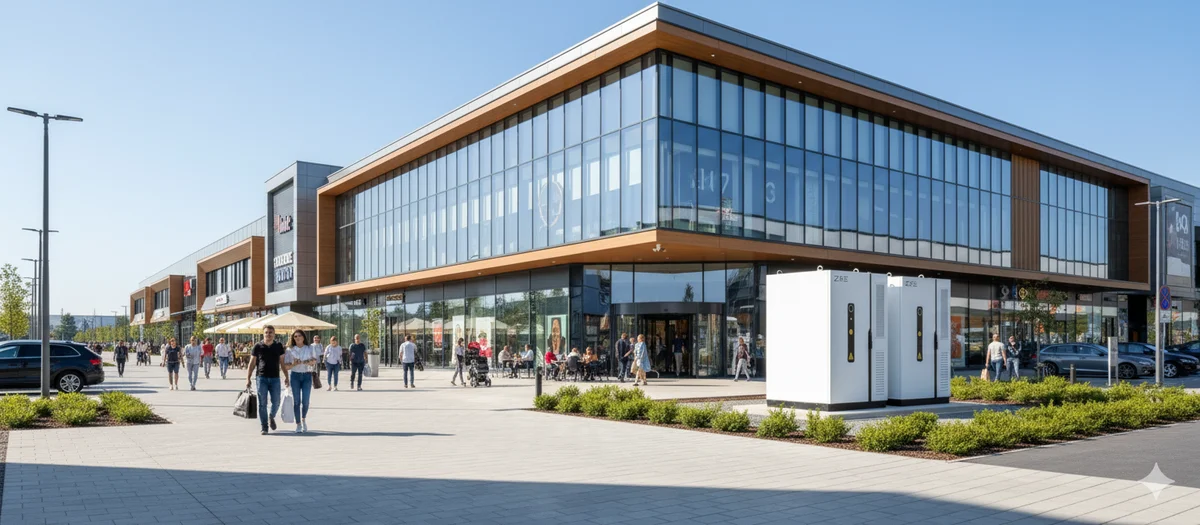
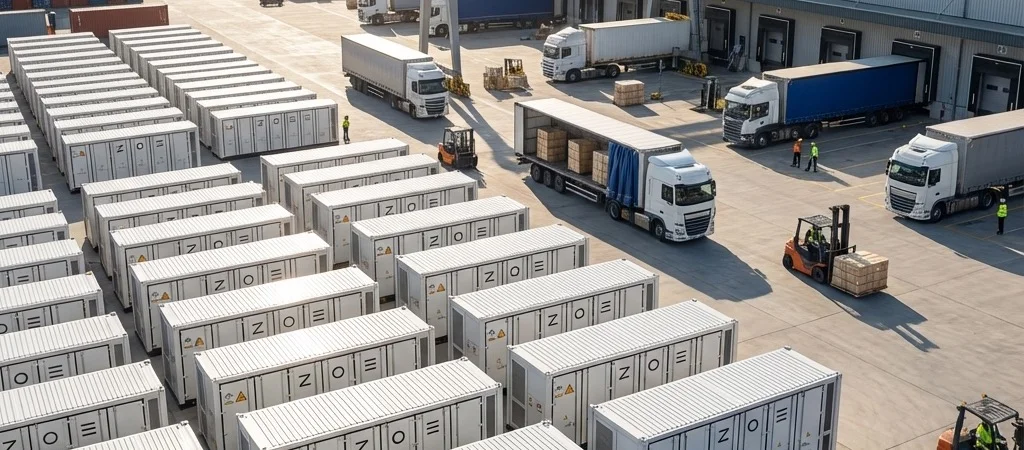
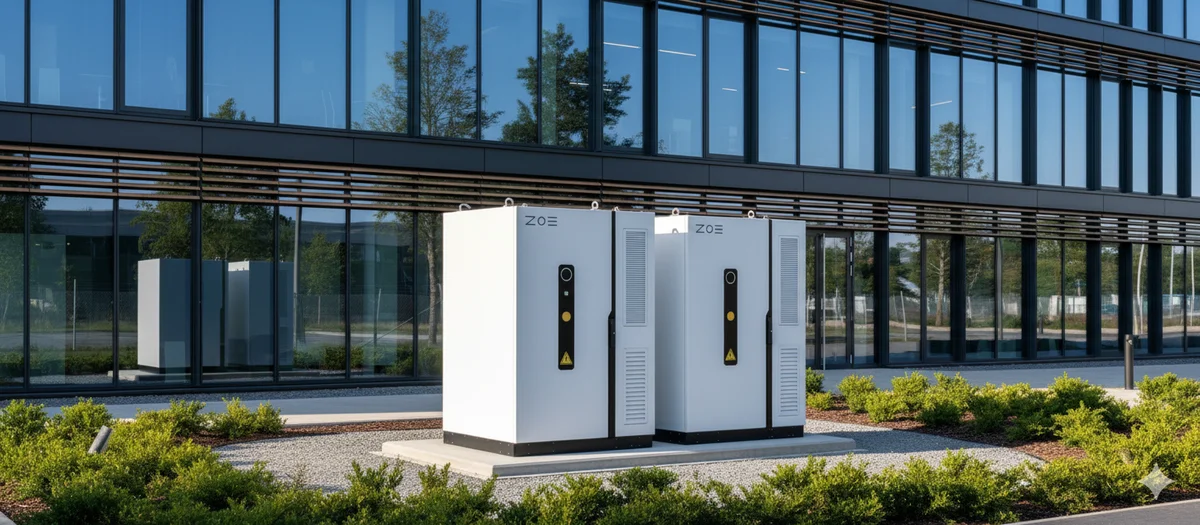
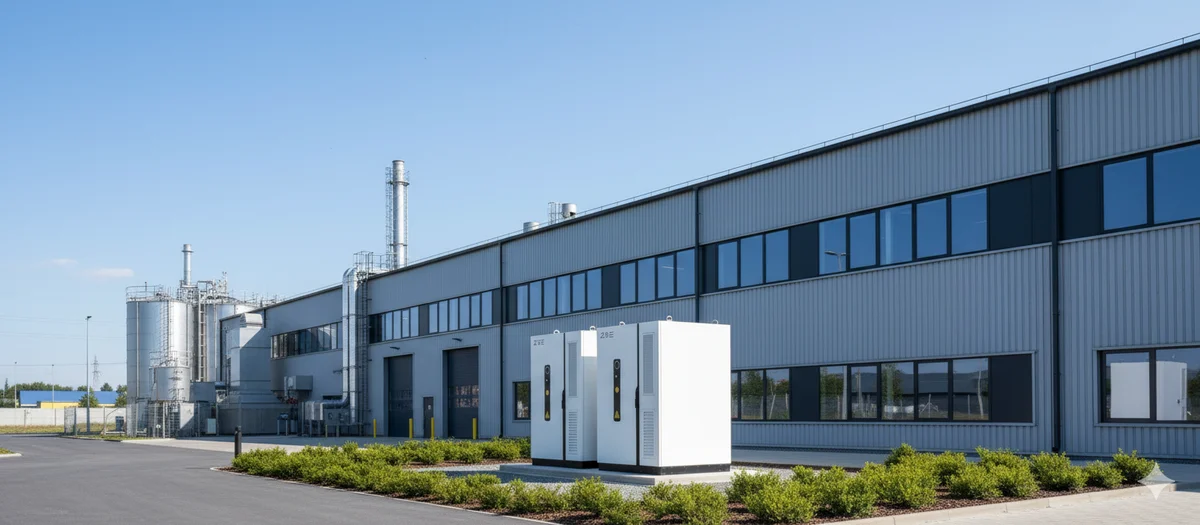
We install compact all-in-one plug-and-play systems for smaller locations or larger units tailored to individual needs for facilities with higher grid connection capacity. All systems are fully integrated and ready to operate.
In the variant offered by Sun Valley Energy, the business’s role is limited to being a Host.
- We (Operator): Finance the purchase, installation, insurance, and maintenance of the storage system. Manage its operation in energy markets.
- You (Host): Provide a piece of land (min. 5 m²) and access to your transformer station (GPZ).
This is a partnership arrangement where financial and technological risk lies on our side, while profits are shared.
How Does Energy Storage Generate Revenue? Revenue Sources
Many business owners wonder how a “large battery” can generate such significant revenue. The secret lies in diversification. Our systems don’t rely on a single revenue source but implement a “revenue stacking” strategy.
1. Capacity Market – The Pillar of Stability
The Capacity Market is a statutory mechanism designed to ensure Poland’s energy security. Simply put: PSE pays generators and storage systems not for produced energy, but for readiness (dispatchable capacity) to deliver it in situations threatening energy balance.
For energy storage, this is an ideal solution. Capacity Market auctions contract revenues 15, or even 17 years in advance. This means that even before breaking ground, the project has a guaranteed steady revenue stream, independent of electricity price fluctuations on the exchange.
2. Ancillary Services (FCR, aFRR)
This is the most technically advanced part of the puzzle. Energy storage acts as a “frequency guardian” in the grid. In Poland, the standard frequency is 50 Hz. Any deviation threatens system failure.
- FCR (Frequency Containment Reserve): Primary reserve. Storage responds within milliseconds, releasing or absorbing energy to stabilize sudden fluctuations.
- aFRR (automatic Frequency Restoration Reserve): Secondary reserve, automatically activated by PSE signal, aimed at restoring frequency to normal over a longer horizon (minutes).
These services are highly valued because they require advanced technology and lightning-fast response times, which modern LFP (lithium iron phosphate) batteries possess.
3. Price Arbitrage (Spot Market)
The third pillar is classic energy trading, but in a modern version. Thanks to AI algorithms, our systems predict prices on the Day-Ahead Market (DAM) and Balancing Market.
Typical scenario: Storage charges during 11:00-14:00 hours when photovoltaics across the country operate at full capacity and energy prices drop (sometimes below zero!). Then it releases this energy to the grid during 19:00-21:00 hours when people return home and the sun no longer shines – when prices are highest. The difference (spread) represents pure profit.
Benefits for Companies – Why Is It Worth It?
The Battery-as-a-Service model offers a range of benefits for businesses in Poland:
- Zero investment (0 PLN CAPEX): The operator covers all costs of purchasing, installing, and insuring the storage system.
- Passive income: The company receives a share of profits from the energy market (typically 50-150 PLN/kW/month, depending on conditions).
- No technological risk: The operator is responsible for service, maintenance, and system management.
- ESG support: Energy storage supports energy transformation and improves the company’s sustainability metrics.
- Grid stabilization: Storage can improve power quality at the facility (reduction of voltage fluctuations).
- Utilization of unused resources: Free space and grid connection capacity generate revenue.
Revenues are not guaranteed and depend on many factors, including energy prices, market conditions, and legal regulations. Estimates presented in the article are examples.
Legal Regulations in Poland
Energy storage systems in Poland operate within several key legal acts:
Renewable Energy Sources Act (RES Act)
According to the RES Act, energy storage systems can participate in the capacity market and provide ancillary services. The act defines energy storage as a device used to store electrical energy in any form.
Energy Law
Energy Law regulates issues of connecting storage to the grid, technical requirements, and operator obligations. Energy storage systems must meet technical requirements specified by the distribution system operator (DSO) or transmission system operator (TSO).
URE (Energy Regulatory Office)
URE supervises the energy market in Poland, including Capacity Market auctions and ancillary services. The storage operator must obtain a license for electricity generation (if the storage exceeds a certain capacity).
UOKiK (Office of Competition and Consumer Protection)
UOKiK has issued guidelines regarding advertising and energy offers, prohibiting misleading promises about investment returns. All BaaS offers must be transparent and fact-based.
Important: Regulations in Poland change frequently. Before making a decision, consult with a professional legal and energy advisor.
Risks and Limitations – What’s Worth Knowing?
The Battery-as-a-Service model, despite many benefits, involves certain risks and limitations worth knowing:
1. Energy Price Volatility
Revenues from price arbitrage depend on energy price differences in the market. During periods of low price volatility (e.g., with stable coal production), profits may be lower than expected.
2. Changes in Legal Regulations
The energy market in Poland is dynamic. Changes in regulations regarding the Capacity Market, ancillary services, or grid fees may affect project profitability. Regulations may change without prior notice.
3. Grid Technical Limitations
Not every location is suitable for energy storage. Sufficient grid connection capacity (min. 100 kW), access to a transformer station, and consent from the distribution system operator are required. In some regions, the grid may be overloaded.
4. Permit and Approval Requirements
Installing energy storage requires a series of permits:
- Building permit (or construction notification)
- Environmental impact assessment (in some cases)
- Fire department approval (fire safety certificate)
- Property owner consent
- Connection conditions from DSO/TSO
The process of obtaining all permits can take 6-12 months.
5. Technological Risk
Although modern LFP batteries are very safe, every technology carries some risk of failure. The operator is responsible for insurance and service, but work interruptions may affect revenues.
6. Misleading Offers in the Market
The energy storage market in Poland is young, and offers promising unrealistic investment returns appear. Always verify offers, check operator references, and consult with an independent advisor.
Summary: Risks exist, but in the BaaS model, most of them rest with the operator, not the host company. The key is choosing a credible partner with experience and solid references.
How to Start? Practical Steps
If you’re considering installing energy storage in the BaaS model, here are practical steps you should take:
Step 1: Initial Location Assessment
Check if your company meets basic requirements:
- Grid connection capacity: min. 100 kW (the more, the better)
- Available space: min. 5 m² (depending on system size)
- Access to transformer station (GPZ)
- Property ownership or long-term lease
Step 2: Use the Calculator
Use our revenue calculator to get a preliminary estimate of potential profits. The calculator takes into account grid connection capacity, energy tariff, and company operating pattern.
Step 3: Technical Audit
Contact the operator (e.g., Sun Valley Energy) to schedule a free technical audit. The audit includes:
- Assessment of grid connection capacity and network availability
- Analysis of company energy profile
- Preliminary installation design
- Estimated revenue valuation
Step 4: Contract Review
If the audit is positive, you’ll receive a BaaS contract proposal. Key elements to check:
- Profit sharing (typically 50/50 or 70/30)
- Contract duration (usually 15-20 years)
- Responsibility for insurance and service
- Contract termination conditions
- Performance guarantees
Important: Before signing the contract, consult with a lawyer specializing in energy law.
Step 5: Obtaining Permits
The operator usually handles the permit process, but you as the property owner must provide necessary documents and consents. The process typically takes 3-6 months.
Step 6: Installation and Commissioning
After obtaining all permits, storage delivery and installation follow (2-3 months), then testing and commissioning (1 month). From this moment, the storage starts generating revenue.
Check Your Company’s Potential
Can your energy connection become a source of passive income? Use our calculator to receive a free preliminary estimate of potential revenues.