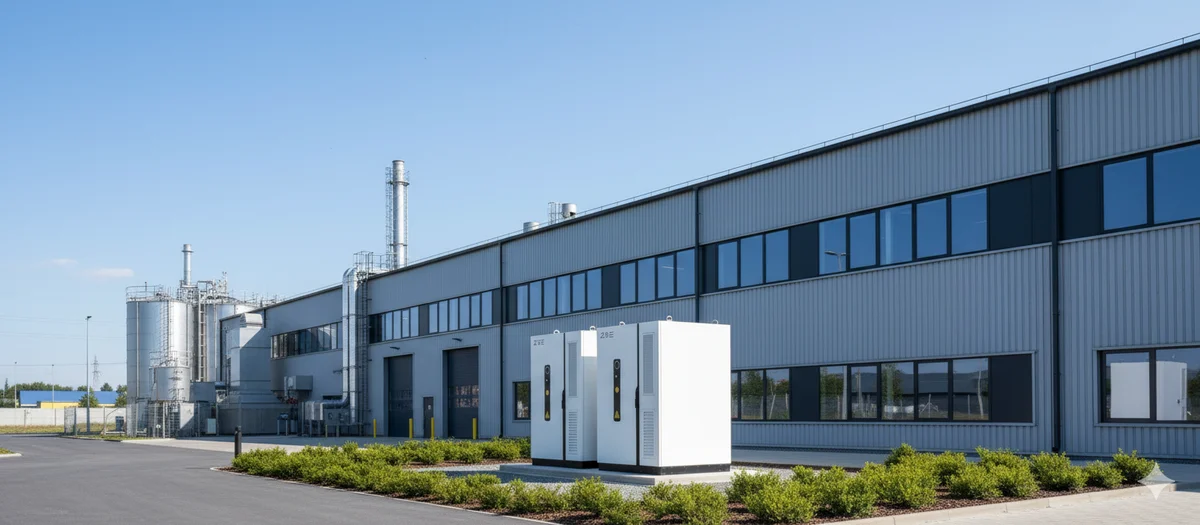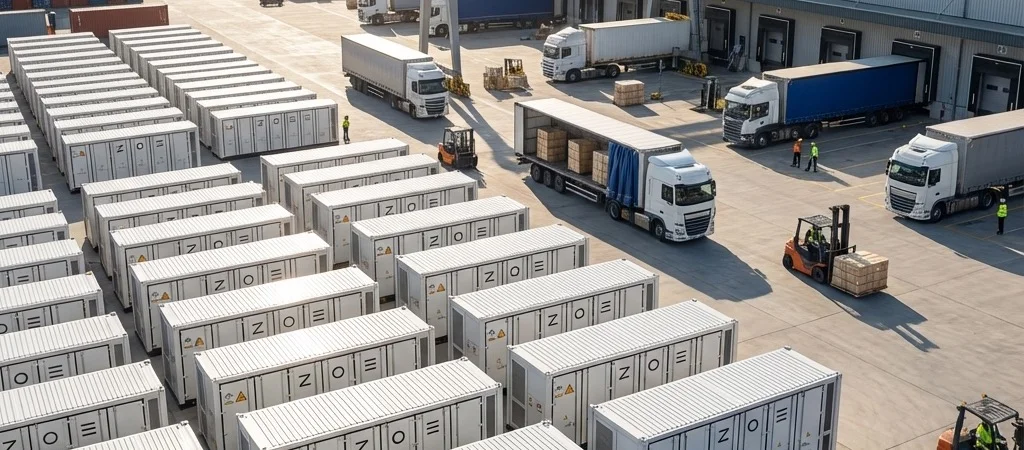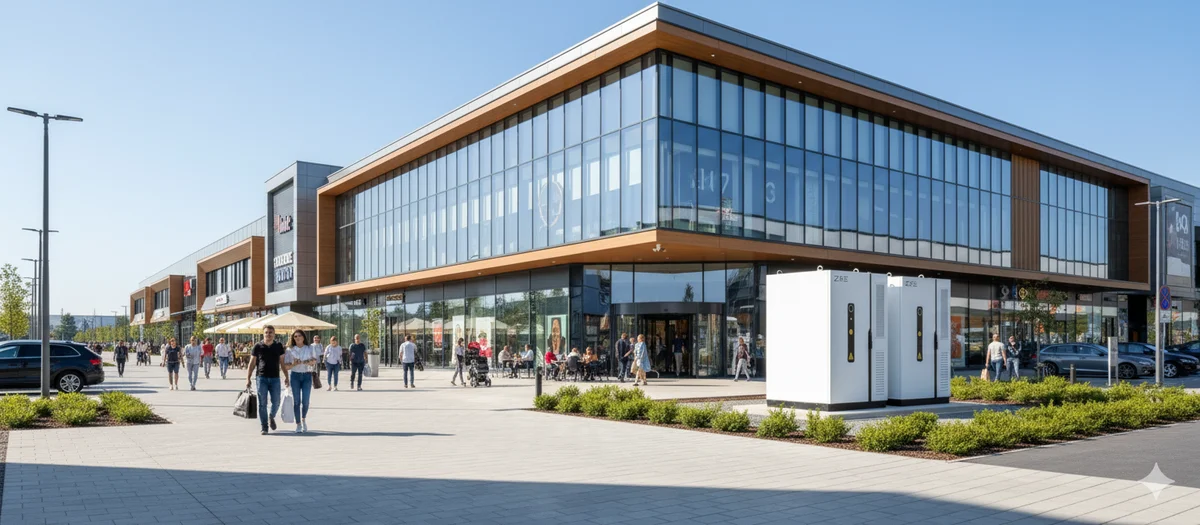
Owners of large commercial facilities – shopping centers, logistics parks, or high-bay warehouses – often have two resources that are worth their weight in gold in modern energy: strong grid connection and space.
These resources, often not fully utilized, can become a source of additional revenue. In the Battery-as-a-Service (BaaS) model, energy storage for retail and logistics offers the opportunity to earn from hosting industrial batteries without bearing investment costs.
Shopping centers typically have grid connection capacity from 500 kW to several MW, much of which remains unused outside peak hours. Logistics parks have extensive maneuvering areas and green spaces. High-bay warehouses have their own transformer stations.
All these facilities share one thing: they have energy infrastructure and space that can be used to host electrical energy storage (BESS – Battery Energy Storage Systems).
In this article, we explain how this business model works, what the legal requirements are in Poland, and what benefits and risks are associated with hosting energy storage in commercial facilities.
What is Energy Storage and How Does It Work?
Electrical energy storage (BESS) is a system that stores electrical energy and releases it to the grid at the right moment. According to the definition from the Energy Law, energy storage means “postponing final consumption of electrical energy or converting energy taken from the grid into another form of energy, storing that energy, and then converting it back into electrical energy.”
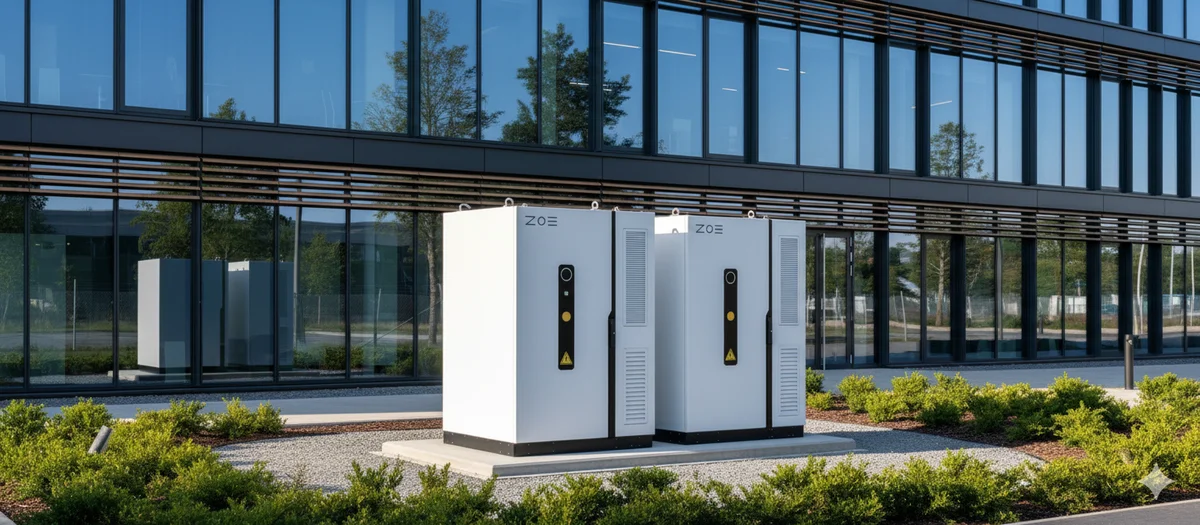
In practice, modern energy storage systems are compact all-in-one plug-and-play systems for smaller locations (from 5 m²) or larger units tailored to individual needs for facilities with higher grid connection capacity. All use lithium-ion batteries, similar to those in electric vehicles, but on a much larger scale.
Energy storage consists of several key components:
- Batteries – store electrical energy (capacity measured in kWh)
- Inverters – convert direct current (DC) to alternating current (AC) and vice versa
- Battery Management System (BMS) – monitors battery status, temperature, voltage
- Cooling system – maintains optimal operating temperature
- Safety systems – fire protection, monitoring, alarms
Grid-connected energy storage can provide various services: frequency stabilization (FCR, aFRR), peak demand reduction (peak shaving), price arbitrage (buying cheap, selling expensive), and emergency power.
Why Shopping Centers Are Ideal for Energy Storage
Shopping centers have unique characteristics that make them perfect locations for hosting BESS:
1. Strong Grid Connection
Shopping centers typically have grid connections of 500 kW to 5 MW or more. This capacity is needed for:
- Lighting and HVAC systems
- Escalators and elevators
- Refrigeration in supermarkets
- Restaurant equipment
- Charging stations
However, peak demand occurs only during specific hours (weekends, holidays, evening hours). Outside these periods, significant capacity remains unused – perfect for energy storage.
2. Available Space
Shopping centers have multiple suitable locations for BESS installation:
- Parking lots – Outdoor areas with easy access
- Rooftops – Flat roofs with structural capacity
- Green areas – Lawns and landscaping zones
- Technical areas – Near transformer stations
- Underground parking – For indoor installations
Space requirements are modest: 5-40 m² depending on system size.
3. Professional Management
Shopping centers have professional facility management teams that:
- Understand technical infrastructure
- Can coordinate installation and maintenance
- Have experience with contractors and permits
- Maintain high safety and operational standards
4. Strategic Location
Shopping centers are typically located:
- Near urban centers with high energy demand
- In areas with grid congestion (high value for grid services)
- Close to distribution substations
- In zones with good grid infrastructure
5. Long-Term Stability
Shopping centers are long-term investments with:
- Stable ownership structures
- Long-term leases with tenants
- Predictable operations
- Financial stability
Why Logistics Parks Are Perfect for BESS
Logistics parks and distribution centers have characteristics that make them excellent BESS hosts:
1. Massive Grid Connections
Modern logistics parks have grid connections of 1-10 MW or more for:
- Automated warehousing systems
- Refrigeration and cold storage
- Conveyor systems and sorting equipment
- Electric forklift charging
- Office and facility systems
Much of this capacity is unused during night shifts or weekends.
2. Extensive Land Area
Logistics parks have:
- Large maneuvering areas
- Truck parking zones
- Green buffer zones
- Expansion areas
- Rooftop space on large warehouses
Plenty of space for BESS installation without affecting operations.
3. 24/7 Operations
Many logistics facilities operate around the clock, providing:
- Continuous security and monitoring
- On-site technical staff
- Immediate response to issues
- Professional facility management
4. High Energy Costs
Logistics facilities have high electricity consumption, making them ideal for:
- Peak shaving to reduce demand charges
- Time-of-use optimization
- PV self-consumption (if solar installed)
- Backup power for critical operations
5. ESG and Sustainability Goals
Many logistics companies have ambitious sustainability targets. Hosting energy storage:
- Supports grid stability and renewable integration
- Reduces carbon footprint
- Improves ESG metrics
- Demonstrates environmental leadership
Revenue Potential for Retail and Logistics
Shopping Center Example (1 MW system):
Grid connection: 2 MW total, 1 MW available for BESS
Revenue streams:
- Capacity Market: 150,000 - 250,000 PLN/year
- FCR/aFRR: 200,000 - 600,000 PLN/year
- Energy arbitrage: 50,000 - 150,000 PLN/year
- Total operator revenue: 400,000 - 1,000,000 PLN/year
Host share (40%): 160,000 - 400,000 PLN/year
Additional benefits:
- Peak shaving savings: 50,000 - 100,000 PLN/year
- Backup power value: Priceless during outages
- ESG improvements: Enhanced sustainability profile
Logistics Park Example (3 MW system):
Grid connection: 5 MW total, 3 MW available for BESS
Revenue streams:
- Capacity Market: 450,000 - 750,000 PLN/year
- FCR/aFRR: 600,000 - 1,800,000 PLN/year
- Energy arbitrage: 150,000 - 450,000 PLN/year
- Total operator revenue: 1,200,000 - 3,000,000 PLN/year
Host share (40%): 480,000 - 1,200,000 PLN/year
Additional benefits:
- Peak shaving savings: 150,000 - 300,000 PLN/year
- EV charging optimization: 50,000 - 100,000 PLN/year
- Backup power: Critical for cold storage
The BaaS Model for Retail and Logistics
How It Works:
- Assessment – Operator evaluates your facility’s potential
- Contract – Negotiate hosting agreement (typically 15-20 years)
- Permits – Operator handles all permits and approvals
- Installation – Operator installs BESS (1-3 months)
- Operation – Operator manages all market participation
- Revenue sharing – You receive monthly payments (30-50% of revenues)
Your Responsibilities:
- Provide space (5-40 m²)
- Provide grid connection access
- Allow installation and maintenance access
- Maintain site security
Operator Responsibilities:
- Finance 100% of investment
- Handle all permits and approvals
- Install and commission system
- Manage all market participation
- Cover all operational costs
- Maintain insurance
- Provide performance reporting
Case Study: Shopping Center in Warsaw
Facility: Regional shopping center, 25,000 m² GLA
Grid connection: 1.5 MW total, 800 kW available
Installation: 800 kW / 1.6 MWh BESS on parking lot
Space used: 15 m² (2 containers)
Installation time: 2 days
Annual revenues:
- Capacity Market: 120,000 PLN
- FCR: 320,000 PLN
- Arbitrage: 80,000 PLN
- Total: 520,000 PLN
Host share (40%): 208,000 PLN/year
Additional benefits:
- Peak shaving savings: 60,000 PLN/year
- Backup power for critical systems
- Improved ESG score
- Positive PR and community impact
Total value to host: 268,000 PLN/year
ROI: Infinite (zero investment)
Requirements for Retail and Logistics Facilities
Technical Requirements:
✅ Grid connection: Min. 100 kW available capacity ✅ Space: Min. 5 m² for small systems, 20-40 m² for large ✅ Access: Truck access for delivery and maintenance ✅ Location: Proximity to grid connection point ✅ Ground: Stable surface (concrete, asphalt, or prepared ground)
Legal Requirements:
✅ Property rights: Ownership or long-term lease ✅ Permits: Building permit (if required), grid connection agreement ✅ Zoning: Compliance with local zoning plan ✅ Insurance: Operator maintains comprehensive coverage
Operational Requirements:
✅ Security: Site security and access control ✅ Coordination: Facility management cooperation ✅ Communication: Regular reporting and updates ✅ Maintenance access: Allow scheduled and emergency access
Risks and Mitigation
Risk 1: Space Opportunity Cost
Risk: Space used for BESS could be used for other purposes.
Mitigation:
- Use underutilized areas (parking edges, green zones)
- Calculate opportunity cost vs. hosting revenue
- Include termination clauses for future development
Risk 2: Tenant or Customer Perception
Risk: Tenants or customers may have concerns about safety.
Mitigation:
- Choose reputable operator with proven safety record
- Ensure compliance with all safety standards
- Communicate benefits (sustainability, grid support)
- Maintain professional appearance and signage
Risk 3: Regulatory Changes
Risk: Changes in energy market regulations.
Mitigation:
- Include regulatory change clauses in contract
- Work with experienced operator who monitors regulations
- Diversify revenue streams to reduce single-market dependence
Risk 4: Operator Performance
Risk: Operator fails to meet revenue projections.
Mitigation:
- Verify operator’s track record and financial stability
- Include minimum revenue guarantees
- Require performance reporting
- Include termination clauses for non-performance
Getting Started: Next Steps
Step 1: Initial Assessment
- Measure available grid connection capacity
- Identify suitable installation locations
- Gather basic facility information
- Use online calculator for preliminary estimate
Step 2: Contact Operator
- Request detailed feasibility study
- Provide facility documentation
- Schedule site visit
- Discuss preliminary terms
Step 3: Feasibility Study
- Operator conducts technical analysis
- Financial modeling and revenue projections
- Legal and regulatory review
- Preliminary contract terms
Step 4: Contract Negotiation
- Review and negotiate hosting agreement
- Engage legal counsel
- Finalize revenue sharing terms
- Sign contract
Step 5: Implementation
- Operator obtains permits
- Installation and commissioning
- Testing and certification
- Start of commercial operation
Calculate Your Facility’s Potential
How much can your shopping center or logistics park earn from hosting energy storage? Use our calculator for a free estimate.